Places & Photography
How to Choose Denver Photo Prints for a Place-Connected Home
A practical guide to choosing Denver Photo Prints featuring Union Station and Civic Center Park, with advice on composition, scale, cropping, and arranging landmark photography in your home.
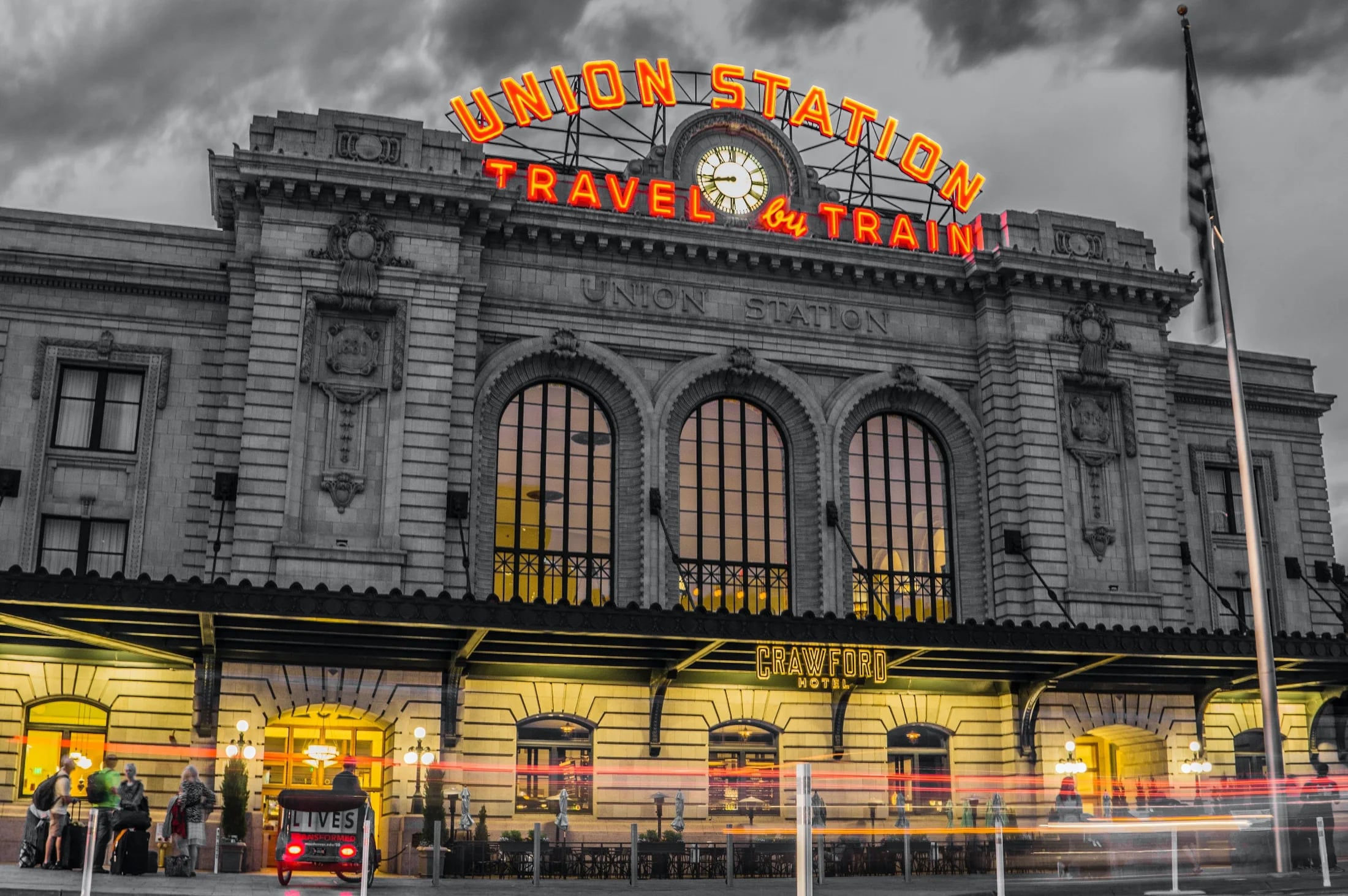
Artwork: BLJ Media original photography · Explore this Photo Print ↗
Denver wall art can do more than fill an empty space. A photograph of a familiar landmark can make a room feel connected to a city, a memory, or a personal sense of place. The challenge is choosing an image that works both emotionally and physically: the subject must suit the room, the scale must fit the wall, and the composition must remain compelling at the size you need. These two Denver Photo Prints offer a focused starting point—one centered on Union Station and one on Civic Center Park—both presented as long-exposure photographs made at night.
Begin with the landmark that belongs in your room
The first decision is not size or placement, but subject. Denver Union Station and Civic Center Park communicate a sense of place through different kinds of architecture. Union Station is a single, recognizable destination, while Civic Center Park represents a broader public setting. Choosing between them can help your wall art feel intentional rather than simply regional.
Consider the room’s role before selecting the photograph. The Denver Union Station — Photo Prints image may suit a space where one distinct architectural subject can act as an anchor. The Civic Center Park, Denver — Photo Prints image may be a better fit when you want the photograph to evoke a civic landscape rather than one building. These are practical distinctions based on subject, not rules, so let your connection to the place lead.
Use composition to decide where the print belongs
Long-exposure photography can reward sustained viewing, so give the image a position where people can pause and look rather than passing it at a narrow angle. A living-room wall opposite seating, a hallway with enough viewing distance, or a quiet office wall can all work as starting points. The important question is whether the photograph has room to function as a visual destination.
Before ordering, study the available wall in relation to nearby furniture and architectural edges. A wide wall may allow the photograph to breathe, while a narrow vertical section may require more careful cropping or a smaller size. Avoid assuming that a landmark photograph must occupy the largest wall simply because the subject is important to you; proportion usually matters more than maximum scale.
Choose scale without losing the sense of place
The Civic Center Park photograph has a documented original Etsy size of 30×40 inches, which provides a useful reference when planning a substantial statement piece. That exact size is not available in the Walgreens same-day selector, so treat the original dimensions as a planning guide rather than an assumption about current ordering options. Confirm the available size before finalizing your layout.
The Denver Union Station listing offered multiple print sizes and custom sizing by request. This makes it especially useful when a wall has an unusual width or when standard proportions do not align neatly with a console, sofa, or existing artwork. Custom sizing should be approached as a measurement exercise: record the usable wall area, allow breathing room around the image, and compare the print’s proportions with the furniture below it.
Think carefully about cropping and visual breathing room
Cropping is a practical choice, not merely a technical one. A tighter crop can emphasize the architecture and make a photograph feel more concentrated, while a more generous crop can preserve the sense of surroundings and give the subject visual breathing room. Because the supplied product descriptions identify both works as long-exposure photographs taken at night, check that any selected format preserves the parts of the scene that make the landmark recognizable to you.
A simple paper template can help. Cut a rectangle in the approximate ratio of the size you are considering and tape it to the wall for a day or two. Test it above the intended furniture and observe it from the room’s usual entrances. This will reveal whether the composition feels crowded, undersized, or comfortably integrated before you commit to a print size.
Build a Denver pairing with rhythm, not duplication
Using both photographs together can create a connected local arrangement, but they should not be treated as interchangeable views. One focuses on Denver Union Station at night; the other focuses on Denver’s Civic Center Park at night. Their shared nighttime, long-exposure approach can provide a visual relationship, while their different landmark subjects keep the pairing from feeling repetitive.
For a two-print arrangement, begin with the wall’s natural centerline and place the pair with consistent spacing. Matching dimensions can create a calm, architectural rhythm, while intentionally different dimensions may make the arrangement feel more informal. If you choose different sizes, align a meaningful edge—such as the tops or bottoms of the prints—so the variation appears deliberate rather than accidental.
A practical example would be placing the Union Station print in a room where it can serve as the primary focal point, then using the Civic Center Park print on an adjacent wall or in a nearby area to extend the Denver theme. If both are placed in one grouping, mock up the arrangement first and keep the spacing generous enough that each landmark remains legible as its own subject.
Bring the idea into your space
Choosing Denver Photo Prints is ultimately an exercise in matching a meaningful subject to the physical character of your room. Start with the landmark that feels most relevant, then evaluate the wall’s width, viewing distance, furniture, and available proportions. Use the documented 30×40-inch reference for Civic Center Park as a planning benchmark, and consider the Union Station listing’s multiple sizes or custom sizing when your space demands a more tailored fit. A paper mock-up, measured spacing, and a deliberate crop can turn a familiar Denver subject into wall art that feels considered rather than incidental.
Sources and artwork references
This guide draws on the identified BLJ Media product descriptions and photographs below. Styling suggestions are editorial guidance, not claims of product testing or a guarantee of particular results.
Editorial note: This guide was created with AI assistance using BLJ Media’s catalog and passed automated editorial checks. It was published without individual human approval.